
Assisting foresters to earn revenue from carbon capture and long-term storage, through carbon credits from projects verified by SGS under the PFS methodology
What we do
We work with forest owners to bring their forests to PFS for certification under the PFS IFM Standard, and the other PFS Standards, so that they can earn voluntary carbon credits. Every PFS project is validated and verified by an independent third-party Validation and Verification Body (VVB).
By meeting the PFS Standards, foresters show that tonnes of forestry CO₂ removal, net of project greenhouse gas emissions, have been or will be captured and stored, consistently with the requirements and guidelines of the IPCC and the UNFCCC Supervisory Body, and in conformity with the principles of ISO 14064-1, ISO 14064-2 and ISO 14064-3.
FVSL helps forest owners prepare their applications and gather the information the PFS Standard requires. Every application under the Standard is lodged and managed by a Project Agent accredited by PFS. FVSL intends to seek accreditation as a Project Agent when the Standard is adopted, which is expected by mid-2027. FVSL is not part of PFS, and PFS certifies projects independently of it.
This allows foresters to earn income from the carbon in their forests while making a real difference to the fight against climate change.

SGS - The world’s leading inspection, testing and certification company, SGS is the VVB currently accepted under the PFS Standard. It will validate the PFS methodology as conforming to the principles of ISO 14064-1:2018, ISO 14064-2:2019 and ISO 14064-3:2019 and to the essential requirements of the UNFCCC Supervisory Body. Visit website.
PFS - PFS. Certifies forestry carbon capture and long-term storage under a methodology to be validated to ISO 14064-2. Visit website.
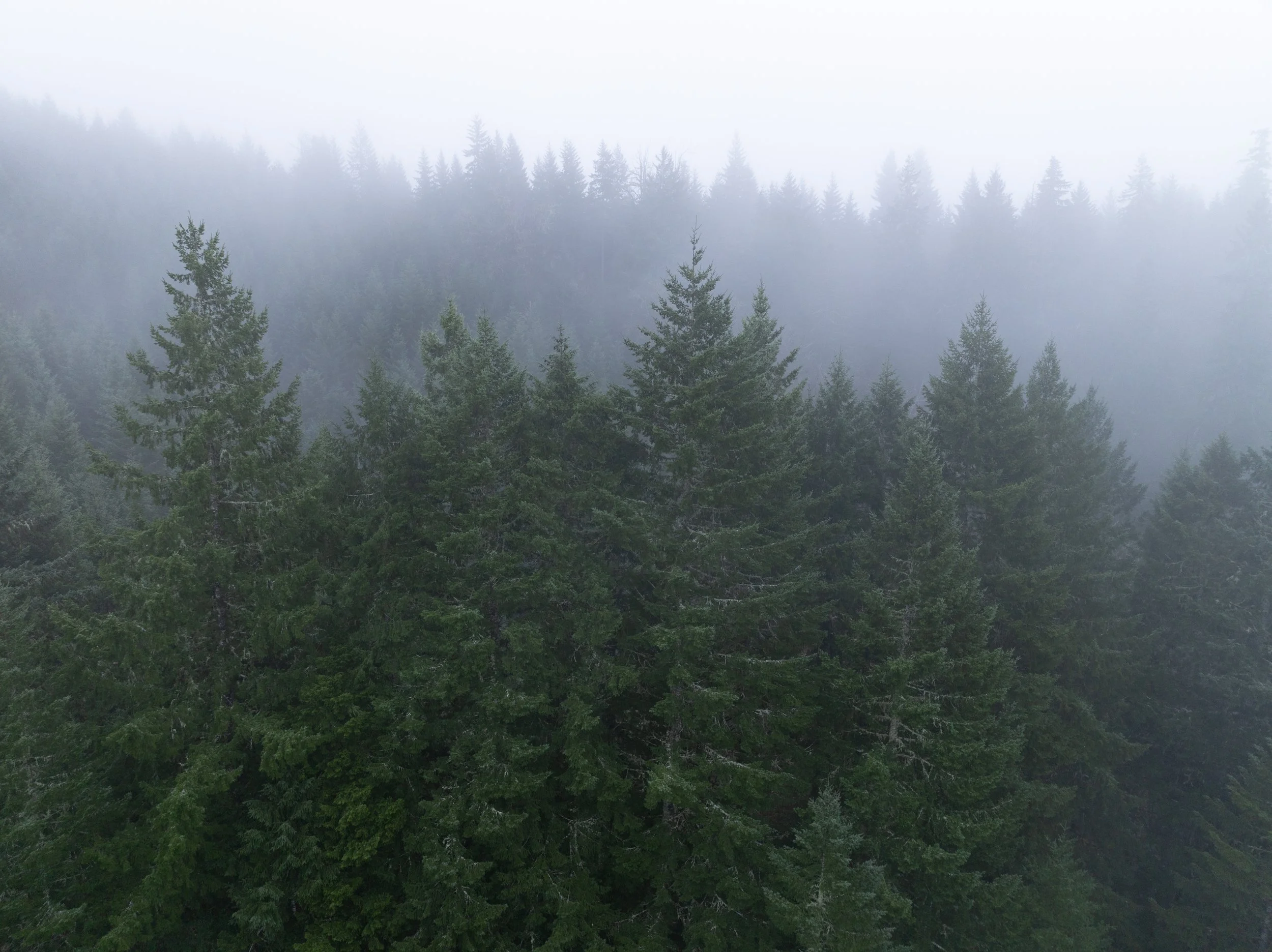
Captured, and protected for 100 years after the last project reporting period
What forests may qualify
The forest must be an existing exotic plantation production forest in New Zealand, planted before 2008. The project must cover at least 80 hectares after exclusions, and smaller blocks may be combined to reach that area.
Rather than a minimum age, the Standard requires that the forest’s carbon stock, when the owner signs the Deed of Encumbrance, is at least the average carbon stock of the forest over its normal rotation, and that the forest is not older than the maximum age set for its species. If you are unsure whether your forest qualifies, please ask us.
Forests in the New Zealand Emissions Trading Scheme can qualify. A forest may earn both voluntary carbon credits and NZUs; any NZUs are disclosed on each credit, as the Standard requires.
In every case the owner registers a Deed of Encumbrance against the title, under which the forest is not felled and continues to grow, consistently with the requirements and guidelines of the IPCC and the UNFCCC Supervisory Body, for 100 years after the last project reporting period. The forest must be one that would be felled without the sale of credits. It must be capable of removing at least 1,000 tonnes of CO₂e per hectare in the first 50 years after planting, and must not be carbon negative at its curve horizon, ordinarily stand age 100.
Credits are issued at the end of each project reporting period. They can also be sold forward, possibly with a down payment when the reporting period begins.
If your forest species is a wilding conifer that is likely to spread beyond the project boundaries, you will need to have and maintain a wilding control plan, as the PFS Standards require.
PFS and SGS Verification: voluntary carbon credits
Once a forest is verified under the PFS Standards, showing tonnes of forestry CO₂ removal, net of project greenhouse gas emissions, that have been or will be captured and stored consistently with the requirements and guidelines of the IPCC and the UNFCCC Supervisory Body, it may be eligible for voluntary carbon credits.
Voluntary carbon credits (VCCs) are carbon credits that are not issued to a registry by a government, other than under the Paris Agreement Article 6 mechanism. They include PFS Stored CO₂ credits.
GHG Statements and offsets
PFS credits allow an emitter to make greenhouse gas removal statements of a kind verified by the VVB and certified by PFS. Such a statement might be: “We have removed, or will remove, tonnes of CO₂ from the atmosphere, and can show with reasonable confidence that those removals will not be reversed before the credits’ Durability Date, which is no later than 2100.”
What makes the PFS Standard more robust than most other standards is that PFS requires proof of long-term durability. Part of that proof uses PFS “best practice” for measuring the durability of CO₂ stored in forests, and every project is protected by a Deed of Encumbrance registered against the title for 100 years after its last reporting period.
PFS IFM credits may also qualify for Ongoing Emissions Responsibility under SBTi’s Corporate Net-Zero Standard V2.0, subject to SBTi’s criteria for recognising credits.

What you do now
If you would like more information about applying to PFS to have your forest assessed and verified, we can provide that service to you once the Standard is adopted and we are accredited as a Project Agent.
There are costs involved in each of the steps PFS requires, and we will advise and support you through the process. Our fees are disclosed to you in full, and under the Standard the fees of a Project Agent may not exceed 10 per cent of the gross proceeds of sale of the project’s credits, apart from genuinely contingent fees.
Indicative steps to get your application ready, verified and your credits sold
1. PFS reviews your complete application. PFS publishes its processing capacity and the order in which it takes up applications.
2. The VVB validates the project and, at the end of each reporting period, verifies the removals. The time taken depends on the VVB.
3. PFS certifies the project, and the credits are issued to your account on the Registry, the Northern Trust Carbon Ecosystem.
4. Sales are made directly between you and the buyer.

You decide to proceed
Together we prepare your application, including baseline measurements, a Project Design Document (PDD), a Monitoring, Reporting and Verification Plan (MRV), an Implementation Plan and a Risk Mitigation Plan and, if the credits are to be sold under an off-take agreement, whatever is needed to meet the buyer’s requirements.

The project is validated and verified by the VVB and certified by PFS.

Credits are issued to your account with Northern Trust, which you will need to have opened through Northern Trust’s onboarding process; acceptance is at Northern Trust’s discretion. If you want corresponding adjustments, these must be negotiated with the Government and may not be available.
Credits issued at the end of each project reporting period are sold. This may be under an off-take agreement rather than over the counter.